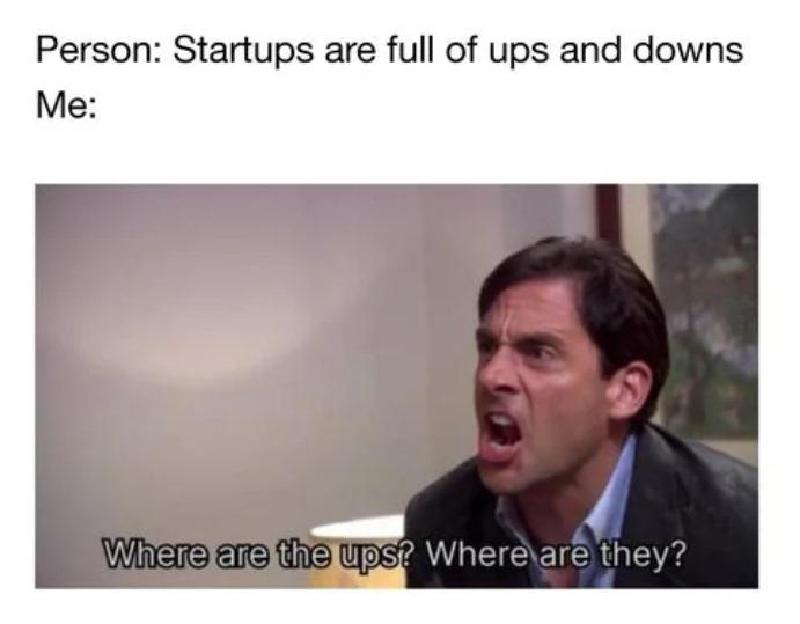
Startups from the Significant Others’ Perspective
I have spent many years working in startups before transitioning to a more corporate role. Before diving into the details, let’s discuss the three phases of every startup.
Phase 1: The Jank - Startups begin with a quickly and informally developed idea, often with minimal documented processes, but it either works or is close to an end product. These are the essential people during this early stage of building the business. They focus on rapid execution to meet crucial deadlines vital for survival.
Phase 2: This phase marks the shift from informal methods to a formalized process, involving automation, documentation, and initiating thorough design reviews to enhance the product. The “Get Stuff Done” individual now operates within new boundaries and begins building automation. Typically, personnel change at this stage, with new team members taking over. The focus remains on “we need this to make money," but now includes developing timelines, managing customer expectations, and understanding the time required for development.
Phase 3: This final stage can take years to achieve, involving a documented, process-oriented, and PMO-enforced workforce. Timelines are respected, processes are created where lacking, and there’s no need to say “To build this or we don’t have jobs.”
Many startups try to skip steps or rush through processes, believing they don’t need a structured approach and thinking they can “make it go faster.” However, most startups face a significant ramp-up period, just like any other company, and simply throwing people at the problem isn’t effective.
Startups should focus on teams developing revenue-generating products. Employees want the company to grow, not to face job cuts. So, why is there such intense pressure on the product team? When shortcuts are taken and there’s an effort to do more with less, senior management notices the increased productivity. They often see this as a way to increase profits from the final product. When you ask for more, they show how much has been accomplished with fewer resources. You won’t get more until real failures happen, unless the workplace is toxic.
High employee turnover, Lack of career growth, Lack of appreciation,poor communication, and a lack of work-life balance—coupled with removing positions without backfills—create the impression that the issue lies with the individual rather than the process.
If that sounded like your significant other or friends casually talking about their day at work, it might be because you work somewhere that can be tough on employees, pushing them to succeed at any cost. About 55 percent of reasons why people leave a company are poor management, work-life balance issues, leadership problems, and toxic culture, while pay accounts for only 15%.
This brings me to the end. Why do startups fail or face long-term issues? Poor leadership and management are often the causes.
The phases I mentioned earlier are guided by management, not by individual contributors or those actively involved in the product. Failure is never the fault of a single person or team; instead, it results from flawed processes or the lack of proper procedures. Leaders and managers must understand this. Punishing employees and disregarding their feedback only makes matters worse. They are actually trying to highlight issues and propose improvements. As a leader, it is your responsibility to listen carefully and respond appropriately.
You have a responsibility to share your information with your team to support their growth, development, and ensure everyone has what they need to succeed. Avoid threats like “Well, if we don’t get this, it’s the end” or dismissive remarks like “We’ll make it work,” as these can cause you to lose the respect of your colleagues. Recognize who your stars are and do not penalize those who are genuinely trying to achieve more with less.